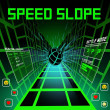
Speed Slope is an arcade reaction game built around momentum and precision. Unlike many endless runner games that give players time to recover from mistakes, Speed Slope rewards anticipation and smooth movement. A single wrong turn can end an otherwise perfect run.
Objective: Travel as far as possible without falling off the track or hitting obstacles.
Controls: Use the left and right arrow keys (or A/D keys) to steer the ball.
Gameplay Loop: Avoid obstacles, stay on the track, react to increasing speed, and aim for a new high score.
1. Stay Near the Center of the Track
During longer runs, staying centered gives you more time to react to unexpected obstacles and sharp turns.
2. Make Small Movements
One mistake I noticed early was steering too aggressively. Small corrections are usually safer than large swings across the track.
3. Look Far Ahead
Don't focus on the ball itself. Watch several obstacles ahead so your brain can prepare before reaching them.
4. Avoid Panic Recovery
Many crashes happen after a near miss. If you drift toward the edge, recover gradually instead of instantly steering back.
5. Learn the Speed Transition
The game feels manageable early on, but difficulty spikes when speed increases. Preparing mentally for these transitions improves survival time significantly.
After multiple runs, Speed Slope feels more demanding than typical endless runners because momentum never stops increasing. Unlike many obstacle-dodging games where patterns repeat frequently, success here depends on maintaining control under pressure. The biggest lesson I learned was that overreacting causes more crashes than slow reactions. Once you start making smaller adjustments, scores improve surprisingly quickly.